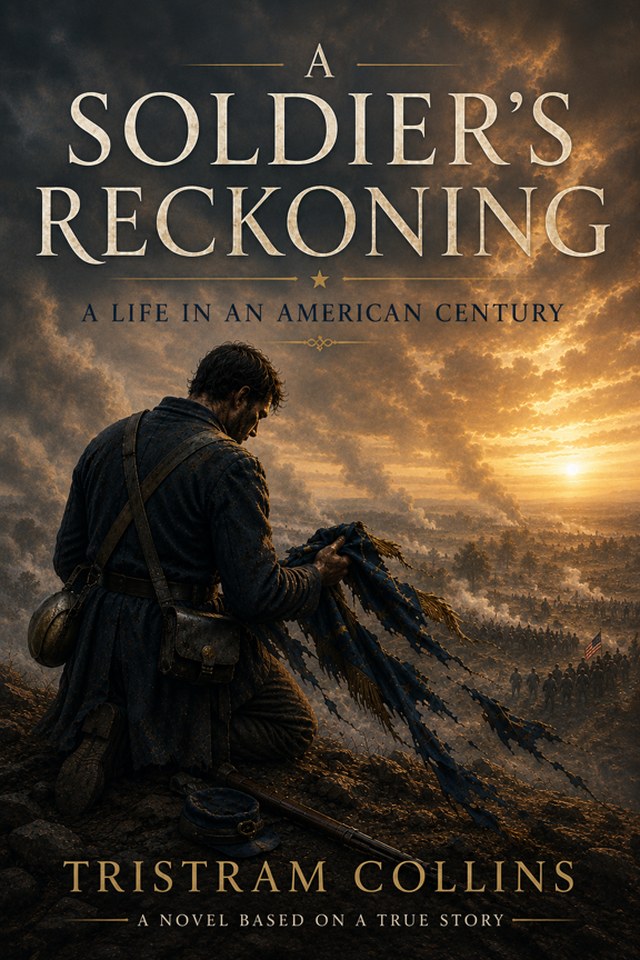
A novel, in progress
A Soldier’s Reckoning
A Life in an American Century
He was eighteen when he enlisted, and nineteen when his regiment was ordered to stand at any cost so that the rest of the Union army could get away. He came out of a Confederate prison camp fifty-one days later, went back to the war, and finished it as a sergeant. He lived another forty-five years, and every one of them ran along the seams of a country remaking itself: whale oil giving way to kerosene, Maine farms giving way to Boston streets, and at the end of it, a gold mine in California.
- Born
- 28 April 1844Fairfield, Maine
- Enlisted
- Aged eighteen16th Maine Infantry, Co. A
- Captured
- 1 July 1863Oak Ridge, Gettysburg
- Held
- Fifty-one daysBelle Isle, Virginia
- Mustered out
- June 1865Sergeant, 16th Maine
- Died
- 25 August 1910Grass Valley, California; carried east and buried at Dorchester, Massachusetts
1 July 1863
The last stand of the 16th Maine
The Union First Corps was breaking on both flanks and had to get back through the town of Gettysburg. General Robinson turned to Colonel Tilden of the 16th Maine and told him to take the position on Oak Ridge and hold it at any cost. Tilden went to his officers and told them what the order was.
You all know what this means.
Col. Charles W. Tilden, to the officers of the 16th Maine
Two hundred and seventy-five men held the ridge while the rest of the division got away. The monument on the field gives their loss as eleven killed, sixty-two wounded and a hundred and fifty-nine taken prisoner. The regiment's own report, filed seven weeks later, gives nine, fifty-two and a hundred and sixty-two. Fewer than forty answered for the regiment on Cemetery Hill that evening. Behind them the division went back through the railroad cut and lived to fight the next two days.
At the end, with the gray lines closing and the regiment about to be captured whole, the men took down their two flags, the national colors and the old Maine pine tree on its golden shield, tore both to pieces, and hid the fragments in their clothing. The scraps went into Southern prison camps in their pockets, and years later they came home to Maine.
Bray Wilkins was among the captured.
Why this story
An American century
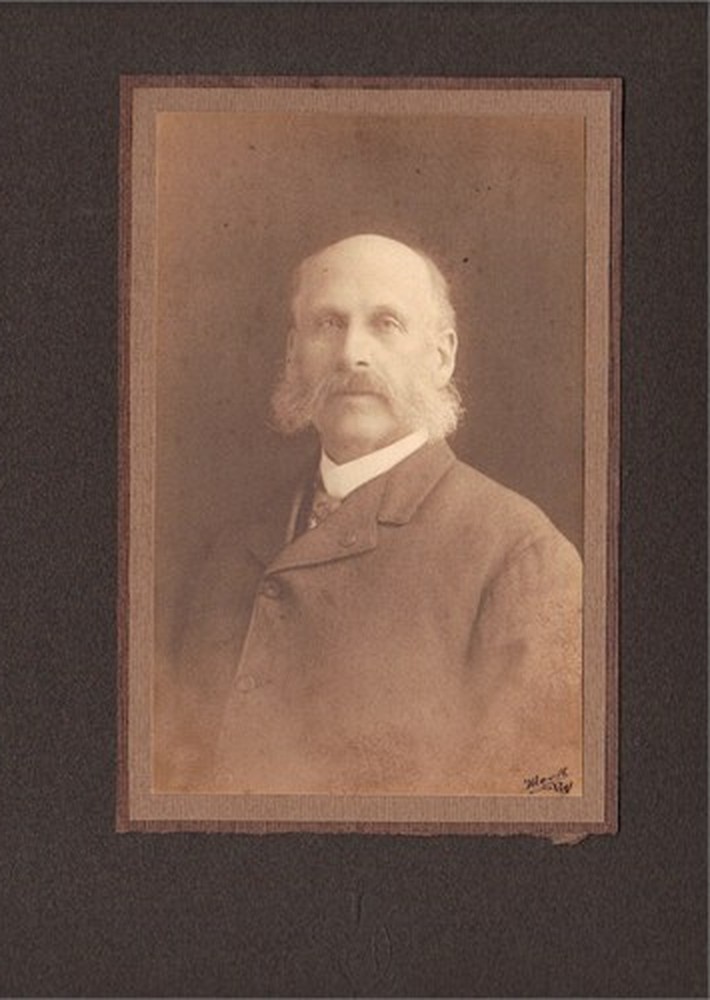
This is not only a war story. Bray Wilkins was born in 1844 into a Maine that still ran on wood, water and whale oil, and he died in 1910 in a California mining town. Nearly every societal shift the country endured during his lifetime he and his family experienced firsthand.
After the war that reshaped the United States, he sold kerosene goods in Boston in the years when kerosene was killing the whale fishery. His daughter Alice married into one of the great whaling families from Nantucket. The fuel that ended their trade was the fuel her father sold.
His son went north to the Alaska gold rush in 1898 and was never heard from again after a letter posted at Seattle. Bray himself was in turn a farmer, a real estate agent, a kerosene goods dealer, a printer, a contractor and a fiscal agent, and then at sixty he went west to manage a gold mine at Grass Valley as part of the population shift to the West. He was struck with paralysis his first winter there. He went bankrupt. Then in May 1908 his men cut into a rich body of ore, and he was dead two years later, ending a life that experienced an American Century.
Boston, 1881 and 1884
What it cost
He married Esther Nowell in 1874. They had grown up in the same Maine town, in the same few square miles, and she had been thirteen when he was sixteen. She died in March 1881, four days after their seventh anniversary, and left him a boy of five and a daughter ten months old.
He married again in April 1883. Abbie was dead inside of ten months. Between the spring of 1881 and the winter of 1884 he buried two wives and went on raising two children. His sister Almira had taken the baby when Esther died, and she was still in the house when Alice was twelve.
He did not marry a third time for twenty-one years. Then, at sixty-one, he did, and brought her back west with him to the mine.
From the record
The research, in the open
The documents this book is built on are mostly unpublished, and some of them exist in one copy. These pages put them where anyone can read them, sources named and disagreements left visible.
More as it is ready: the letters, the family register, and the men who joined in 1863. If one of these names is yours, I would like to hear from you.

About the author
Tristram Collins
Bray Wilkins was my great-great-grandfather. His daughter Alice married into one of the great Nantucket whaling families and stayed on the island, and my mother was born and raised there, on the same small island as Alice, her grandmother. The line that runs from a ridge above Gettysburg to me runs through Nantucket.
I grew up between Connecticut and Nantucket, and read history at Dartmouth. I am not a historian by trade. I live with my family at the Jersey Shore.
This book began with a box of family papers: his own letters home, his enlistment and service cards, the Maine Adjutant General’s returns, the regimental history written by his major, and the Grass Valley newspapers that followed his last years in the mine. What I found was a life that had been thoroughly recorded and never once told. The documents are all there. Nobody ever made them into a story.
A note on method: every detail in the book is either drawn from a cited source or crafted to carry the narrative between them, and I keep a record of which is which. Where the sources disagree, I say so rather than quietly picking a side.
Follow the writing
Be told when it’s finished
Occasional notes from the desk: what the research turns up, what the draft is doing, and word when the book is ready. No more than once a month.
Your address is used for this list and nothing else. Unsubscribe any time.